
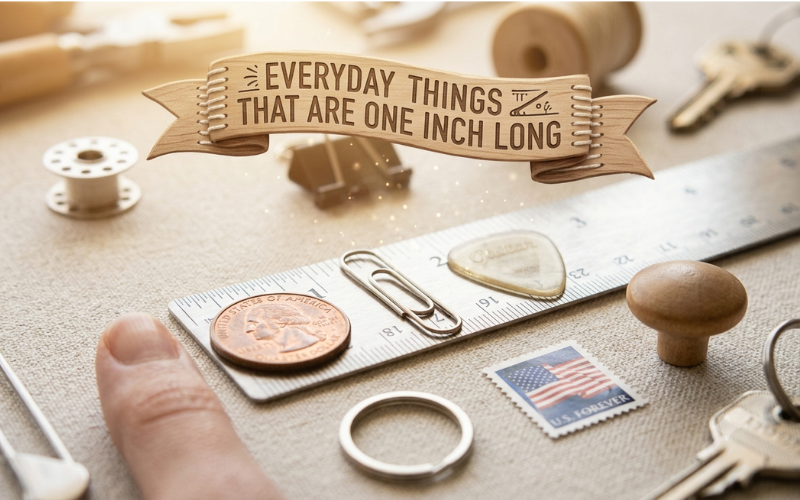
When you need to measure something quickly and there isn’t a ruler, tape measure, or toolbox in sight, knowing how to spot 1 inch in the real world is one of the most practical skills you can have. One inch—equal to exactly 2.54 centimeters or 25.4 millimeters—is a foundational measurement in construction, crafting, hardware, and everyday design.
Because industrial standards rely heavily on this dimension, countless everyday items are manufactured to measure precisely or nearly 1 inch. Once you know what to look for, your pockets, desk drawers, and own hands transform into reliable measuring tools.
Quick Reference Sheet: 1-Inch Everyday Items ⚡
If you need a rapid answer without reading the full breakdowns, use this cheat sheet to find an item near you right now.
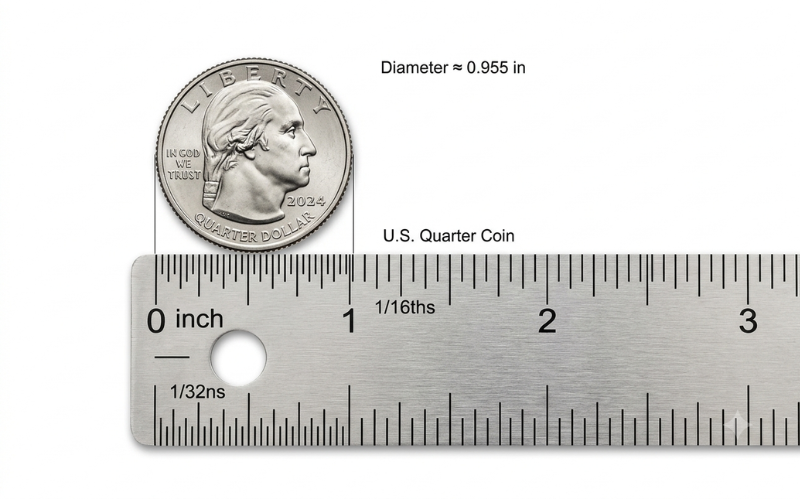
- U.S. Quarter Coin: 0.955 inches in diameter (less than 1/20th of an inch off).
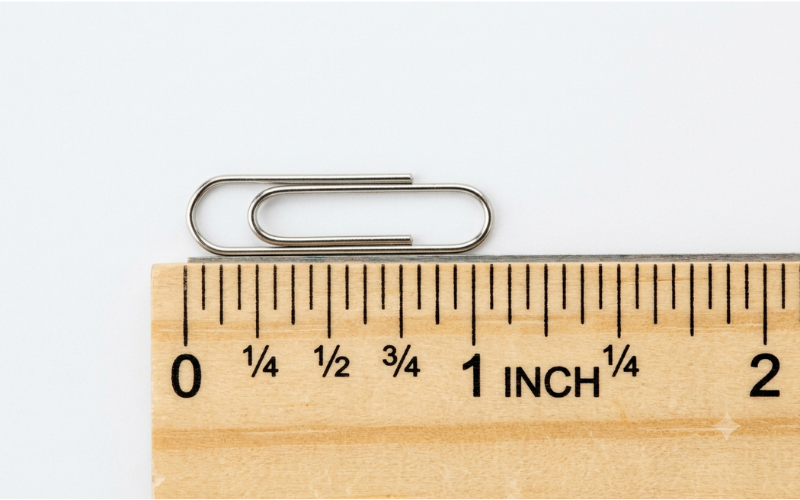
- Small Office Paperclip: Roughly 1.0 inch from loop to loop.
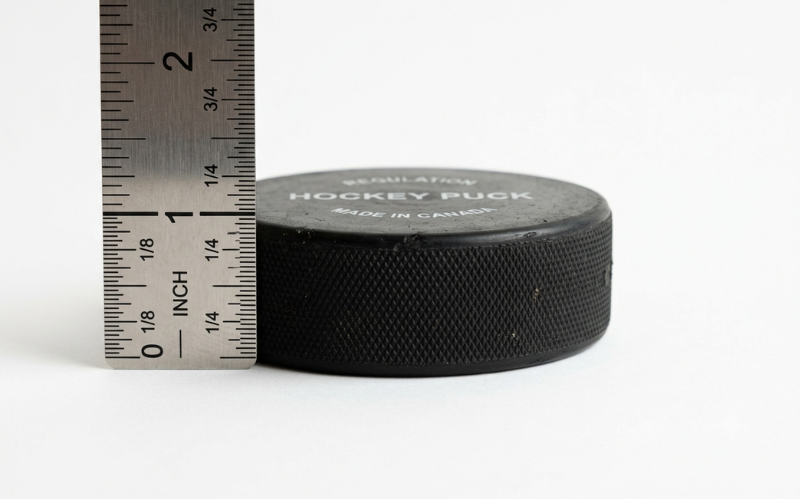
- Regulation Hockey Puck: Exactly 1.0 inch in thickness.
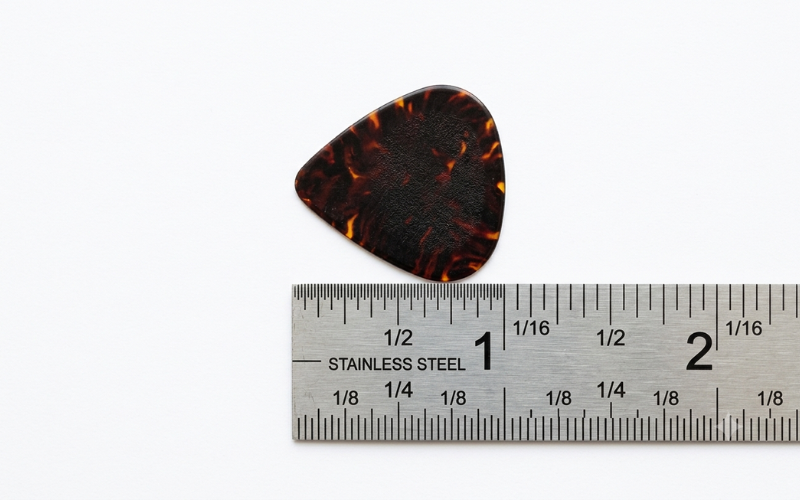
- Standard Guitar Pick: Approximately 1.0 inch from the tip to the top edge.
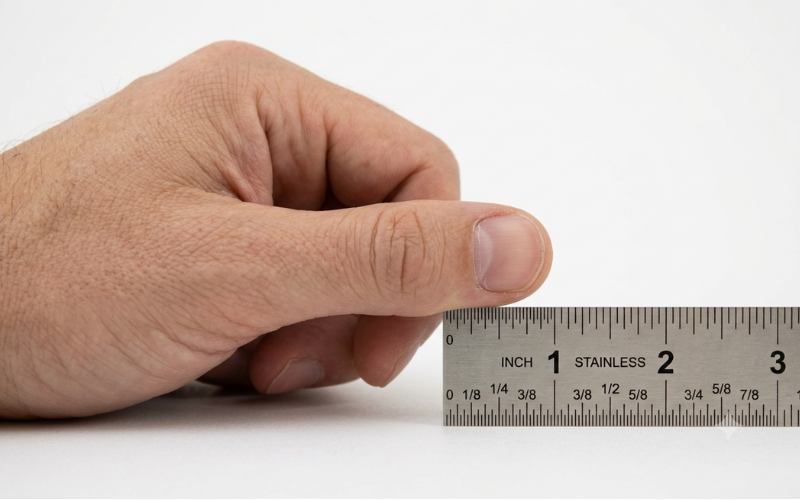
- Adult Thumb (Top Knuckle to Tip): Usually close to 1.0 inch for the average adult.
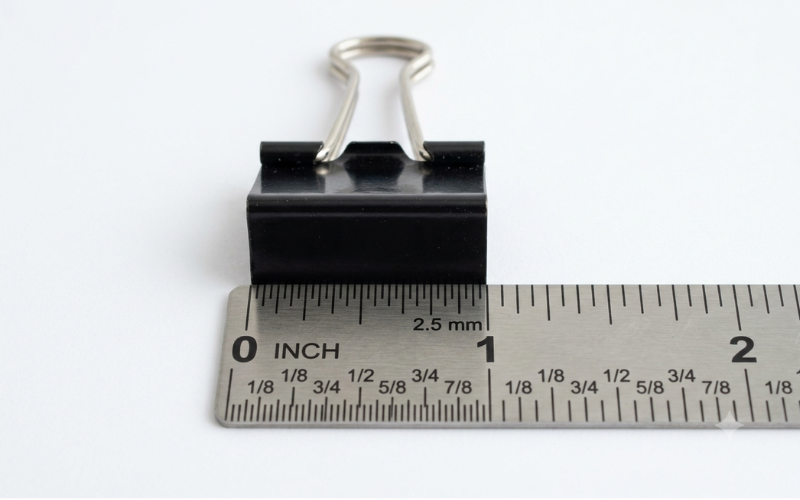
- Medium Binder Clip: Exactly 1.0 inch wide across the black metal jaw.
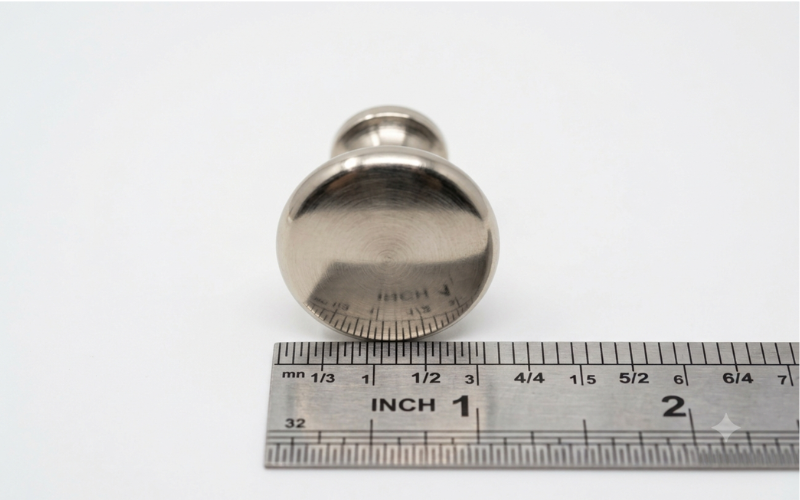
- Standard Cabinet Knob: Exactly 1.0 inch across the circular front face.
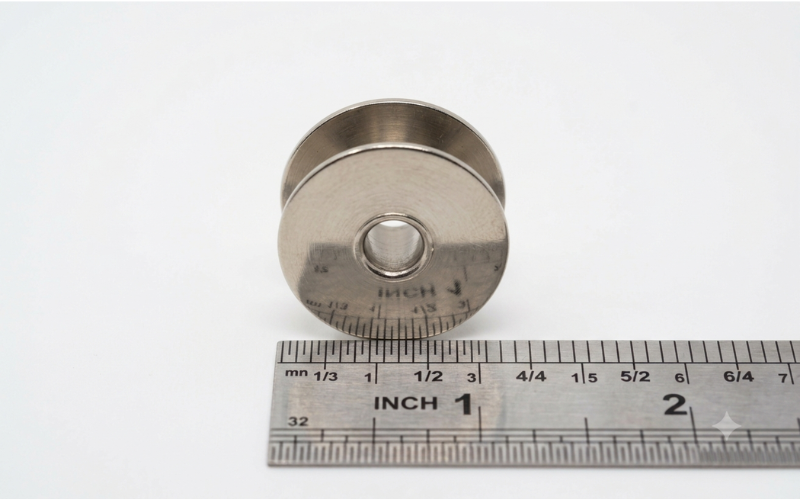
- Class 15 Sewing Bobbin: Exactly 1.0 inch in diameter.
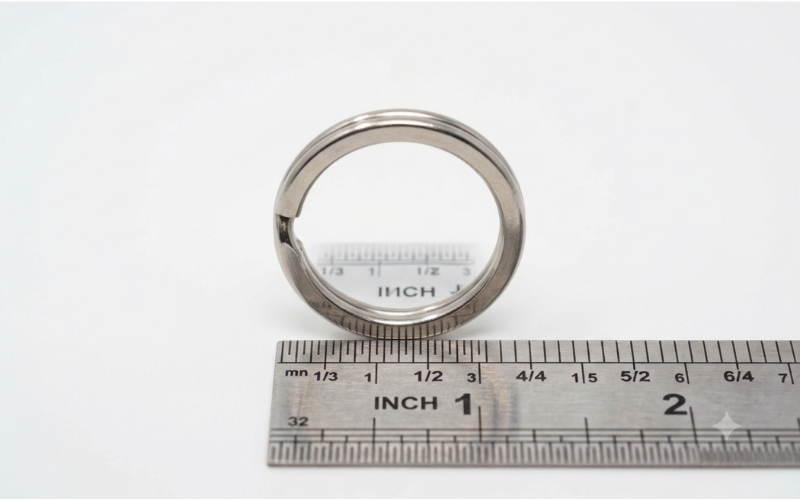
- Heavy-Duty Split Key Ring: Exactly 1.0 inch in outer diameter.
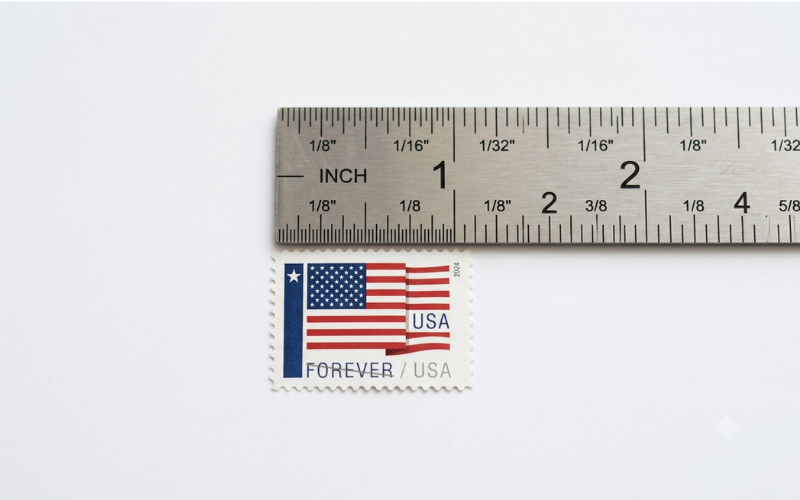
- Standard U.S. Postage Stamp: About 0.87 to 1.0 inch wide across the printed face.
Biowiki Reference Table: 1-Inch Items Compared 📊
This reference table breaks down the 10 everyday objects by exact measurement, metric conversion, item category, and real-world reliability.
| Item Name | Exact Measurement (Inches) | Metric Equivalent (mm / cm) | Category | Reliability Score | Practical Use Case |
| U.S. Quarter Coin | 0.955 in (Diameter) | 24.26 mm / 2.43 cm | Currency | ★★★★★ | Quick pocket reference for diameter & spacing |
| Small Paperclip (#2) | ~1.00 in (Length) | 25.40 mm / 2.54 cm | Office Supply | ★★★★☆ | Wire crafts, small gaps, stationery sizing |
| Regulation Hockey Puck | 1.00 in (Thickness) | 25.40 mm / 2.54 cm | Sports Equipment | ★★★★★ | Checking structural gaps, tool clearances |
| Standard Guitar Pick | ~1.00 in (Height) | 25.50 mm / 2.55 cm | Music Accessory | ★★★★☆ | Measuring string action, small electronics |
| Adult Thumb (Knuckle) | ~0.95 – 1.05 in (Length) | 24.0 – 26.5 mm | Human Body | ★★★☆☆ | Field estimating without physical tools |
| Medium Binder Clip | 1.00 in (Jaw Width) | 25.40 mm / 2.54 cm | Office Supply | ★★★★★ | Desk organization, cable spacing, paper stacks |
| Mushroom Cabinet Knob | 1.00 in (Face Diameter) | 25.40 mm / 2.54 cm | Home Hardware | ★★★★★ | Kitchen hardware upgrades, screw sizing |
| Class 15 Sewing Bobbin | 1.00 in (Diameter) | 25.40 mm / 2.54 cm | Craft / Sewing | ★★★★★ | Machine calibration, fabric seam checking |
| Heavy-Duty Key Ring | 1.00 in (Outer Diameter) | 25.40 mm / 2.54 cm | Hardware / Carry | ★★★★☆ | Keychain sizing, carabiner fitment |
| U.S. Postage Stamp | ~0.87 – 1.00 in (Width) | 22.0 – 25.4 mm | Stationery | ★★★☆☆ | Scrapbooking, mail sizing, envelope margins |
The 10 Most Common Things That Measure 1 Inch Long 🔍
Let’s look at why these 10 items measure an inch, how consistent they are across different manufacturers, and how you can use them in practical situations.
1. A U.S. Quarter Coin (Diameter) 🪙
The U.S. quarter is one of the most accessible measuring tools in North America. Minted by the United States Mint with strict precision, a standard quarter measures 0.955 inches (24.26 mm) across its diameter. While it is technically 0.045 inches shy of a full inch, that 4.5% difference is negligible for almost any household or DIY estimation.
- Why It Works So Well: Coins never shrink, stretch, or warp over time. Whether your quarter was minted in 1965 or 2024, its diameter remains identical.
- How to Use It in the Field: If you need to measure a 3-inch pipe span or check if a bolt is an inch wide, lay a quarter flat against the surface. If you stack three quarters end-to-end in a straight line, you get 2.865 inches, which is just under 3 inches.
2. A Small Office Paperclip (Length) 📎
Paperclips come in several sizes, but the standard small paperclip—often designated as a #2 paperclip in office supply catalogs—is manufactured to be approx. 1 inch long. Jumbo paperclips measure closer to 1.75 or 2 inches, so make sure you are looking at the standard small version.
- Why It Works So Well: Because office supplies are produced on automated wire-bending machines calibrated to imperial measurements, standard small paperclips are remarkably uniform across brands.
- How to Use It in the Field: Paperclips are ideal for measuring small interior spaces where coins won’t fit. For example, if you want to know the depth of a drill hole or the width of a narrow slot, slide a standard paperclip inside until it bottoms out. If the clip sits flush with the opening, the hole is 1 inch deep.
3. A Regulation Hockey Puck (Thickness) 🏒
While most people focus on the 3-inch diameter of an ice hockey puck, its thickness is a masterclass in industrial standardization. By official NHL and international hockey regulations, a standard puck is exactly 1.0 inch (25.4 mm) thick from top to bottom.
- Why It Works So Well: Vulcanized rubber pucks are built to withstand extreme impacts without deforming. Their flat, parallel top and bottom faces make them excellent physical blocks for measuring vertical clearances.
- How to Use It in the Field: Need to check if a furniture leg has 1 inch of ground clearance for a robot vacuum? Slide a hockey puck underneath. If it scrapes the bottom, your clearance is under an inch; if it glides freely, you have more than enough room.
4. A Standard Guitar Pick (Height) 🎸
If you play guitar or have a musician in the house, grab a standard “351 shape” guitar pick—the classic rounded triangle profile popularized by brands like Fender and Dunlop. From the center of the rounded top edge down to the bottom tip, these picks measure between 0.98 and 1.02 inches (approx. 26 mm).
- Why It Works So Well: Picks are flat, lightweight, and rigid. While their thickness varies by millimeter gauge (from thin 0.46 mm to heavy 1.5 mm), their outer silhouette remains standardized so they fit comfortably between the thumb and index finger.
- How to Use It in the Field: Guitar picks are great for sizing up small electronics, pickup heights, or craft margins where metal coins might scratch a delicate finish.
5. Your Adult Thumb from Knuckle to Tip 👍
Your own hand is the only measuring tool you can never leave behind. For the average adult, the distance from the first joint (the top knuckle) of the thumb to the very tip of the thumbnail is roughly 1 inch. In fact, the word “inch” shares historical roots with traditional body measurements, where lengths were estimated using the width or length of a human thumb.
- Why It Works So Well: Once you measure your own thumb against a real ruler, you will know your personal offset for life. Even if your thumb is 0.9 inches or 1.1 inches, knowing that specific number lets you make accurate mental adjustments on the fly.
- How to Use It in the Field: When shopping for lumber, thrift store furniture, or garden pots, place your thumb flat against the edge of the object. It is fast, discreet, and requires zero tools.
6. A Medium Binder Clip (Jaw Width) 🗜️
Binder clips come in specific standardized sizes: micro, small, medium, large, and extra-large. The medium binder clip is engineered with a black steel back that measures exactly 1.0 inch (25.4 mm) wide.
- Why It Works So Well: Unlike flexible paper items, a binder clip is made of tempered steel with sharp, clean 90-degree corners. This gives you an exact 1-inch straightedge across its flat rear spine.
- How to Use It in the Field: Use the back of a medium binder clip as a mini square or spacer when gluing wood trim, spacing out tiles, or setting margins on paper projects.
7. A Standard Mushroom Cabinet Knob (Face Diameter) 🚪
Walk down the hardware aisle of any home improvement store, and you’ll notice that standard round “mushroom-style” cabinet knobs look remarkably uniform. That’s because the traditional face diameter for standard kitchen and bathroom cabinetry knobs is 1.0 inch (25.4 mm).
- Why It Works So Well: Cabinet hardware sizes are standardized so homeowners can swap out old handles without drilling new holes or leaving uncovered marks on wood cabinet doors.
- How to Use It in the Field: When checking whether a replacement latch or backplate will fit your kitchen drawers, comparing it against your existing round cabinet knobs gives you an instant visual check.
8. A Class 15 Sewing Machine Bobbin (Diameter) 🧵
In the world of sewing and textiles, the Class 15 bobbin is the universal standard for domestic sewing machines. Whether made of clear polycarbonate plastic or nickel-plated steel, a Class 15 bobbin measures exactly 1.0 inch (25.4 mm) in diameter across its round flanges.
- Why It Works So Well: Sewing machines require extreme rotational balance. If a bobbin is even slightly wider than 1 inch, it won’t spin freely inside the bobbin case. This tight manufacturing tolerance makes bobbins exceptionally reliable size references.
- How to Use It in the Field: Crafters and quilters can lay a bobbin directly onto fabric to check seam allowances, buttonhole widths, or hem spacing without searching for a sewing ruler.
9. A Heavy-Duty Split Key Ring (Outer Diameter) 🔑
Take a look at your keychain. While small decorative rings measure half an inch, standard heavy-duty steel split rings—the kind used for car keys, office fobs, and hardware tags—are manufactured with an outer diameter of 1.0 inch (25.4 mm).
- Why It Works So Well: Key rings are stamped from spring steel wire and coiled to a uniform diameter so they fit standard lockbox hooks and carabiners.
- How to Use It in the Field: If you need to estimate the diameter of a wooden dowel, curtain rod, or pipe, slide your key ring over it. If the ring fits snugly over the end, the rod is approximately 3/4 inch to 7/8 inch thick; if the outer edges match the width of the rod, the rod is 1 inch across.
10. A Standard U.S. Postage Stamp (Width) ✉️
While commemorative stamps come in various shapes and sizes, the standard definitive U.S. postage stamp (such as the American Flag Forever stamp) is typically printed with a width ranging from 0.87 to 1.0 inch across its horizontal face.
- Why It Works So Well: Stamps are cut on high-precision perforation presses designed to fit standard automated mail-sorting machines.
- How to Use It in the Field: When labeling envelopes, positioning address tags, or spacing out grid layouts in a notebook, a postage stamp gives you an immediate physical reference for a 1-inch width.
How to Calibrate Your Hands for Instant Measurements 🖐️
Using your body to measure lengths is an ancient practice, but accuracy requires calibration. Because everyone’s hands are sized differently, you shouldn’t blindly assume your thumb is exactly 1 inch long.
Here is how to calibrate your hands once so you can rely on them for years:
- Find a Precise Ruler: Lay a standard metal or plastic ruler flat on a table.
- Check Your Thumb Knuckle: Place your thumb along the ruler with the tip of your thumbnail at the zero mark. Note exactly where the first crease of your knuckle lands. For many people, it hits right at 1.0 inch; for others, it might be 0.9 inches or 1.1 inches.
- Check Your Index Finger Width: Lay your index finger across the ruler at the middle joint. An adult index finger is often between 0.75 and 0.85 inches wide, while placing two fingers (index and middle) side-by-side often equals 1.5 inches.
- Check Your Palm Span: Measure the width of your palm across the knuckles (excluding the thumb). For many adults, this distance is almost exactly 3.0 to 4.0 inches. Knowing this lets you count off larger measurements by sliding your hand across a surface.
Why 1 Inch Became an Industrial Standard ⚙️
You might wonder why so many seemingly unrelated items—from sewing bobbins to cabinet knobs—converge on the exactly 1-inch mark. The answer comes down to manufacturing history and modular engineering.
During the Industrial Revolution, American and British factories standardized hardware around the Imperial system. Tools, drill bits, screw threads, and dies were machined in fractional increments: 1/4 inch, 1/2 inch, 3/4 inch, and 1 inch.
When consumers replace a cabinet knob, repair a sewing machine, or buy office supplies, they expect parts from different companies to work together cleanly. Designing an item at exactly 1 inch (25.4 mm) ensures compatibility across global supply chains, making 1 inch one of the most reliable measurements in manufacturing.
How 1 Inch Compares Across Different Measurement Systems 📐
When working on DIY or craft projects that use international instructions, converting inches to metric units quickly can save you from costly cutting mistakes. Here is how 1 inch translates across standard measuring systems:
- In Millimeters: Exactly 25.4 mm
- In Centimeters: Exactly 2.54 cm
- In Feet: Approximately 0.0833 feet (1/12th of a foot)
- In Yards: Approximately 0.0277 yards (1/36th of a yard)
- In Pixels (Standard Web/Screen Resolution): Exactly 96 Pixels at 96 DPI (Dots Per Inch)
- In Print Typography (Points): Exactly 72 Points (an industry standard for font scaling)
Practical DIY & Craft Applications for 1-Inch Items 🛠️
Knowing how to spot 1 inch isn’t just a fun trivia exercise—it solves real practical problems when you’re working with your hands.
Checking Drill Depth Without a Depth Gauge
When drilling into drywall or wood where you don’t want to puncture a pipe or drill through the other side, take a piece of colored tape and wrap it around your drill bit exactly 1 inch from the tip. If you don’t have a tape measure, lay a standard U.S. quarter or small paperclip against the bit to set your tape mark.
Spacing Artwork and Picture Frames
Interior designers often use a 2-inch or 3-inch gap between gallery wall frames. If you don’t have a ruler on hand, slide a medium binder clip or a U.S. quarter between the frames. Three quarters side-by-side give you a clean, consistent 2.86-inch gap for spacing out wall art.
Measuring Pipe and Hose Diameters
Garden hoses and household plumbing lines are measured by their inner or outer diameters—commonly 1/2 inch, 3/4 inch, or 1 inch. Placing a 1-inch heavy-duty key ring flat against the opening of a pipe instantly tells you whether you’re looking at a 3/4-inch line (which fits inside the ring) or a full 1-inch pipe.
Frequently Asked Questions (FAQs) ❓
What is the easiest household item to use for measuring 1 inch?
The easiest and most reliable item is a U.S. quarter coin. At 0.955 inches in diameter, it is within four-hundredths of an inch of a full inch. For most everyday tasks—like checking screw lengths, gap sizes, or margins—a quarter is practically exact.
Is a standard paperclip exactly 1 inch long?
A standard small paperclip (often labeled as #2 size in office catalogs) measures approximately 1 inch long. However, jumbo paperclips measure closer to 1.75 to 2 inches, so make sure you are using standard small clips.
How can I measure 1 inch using my hands?
For most adults, the distance from the top knuckle of the thumb to the tip of the thumbnail is about 1 inch. You can also measure the width of your index finger; for many people, the width across the knuckle is roughly 0.8 to 1.0 inch.
How many millimeters make up 1 inch?
By international agreement, 1 inch is defined as exactly 25.4 millimeters (or 2.54 centimeters). This conversion factor is exact and never changes across metric calculations.
Are all coins 1 inch wide?
No. In the U.S. coinage system, only the quarter (0.955 in) comes close to 1 inch. A penny measures 0.750 inches, a nickel measures 0.835 inches, and a dime measures 0.705 inches. In Canada, the Canadian quarter is slightly smaller at 0.938 inches (23.88 mm).
Can I use smartphone apps to measure 1 inch accurately?
Yes! Modern iOS and Android devices feature built-in measurement apps (like Apple Measure or Google Measure) that use augmented reality (AR) camera sensors to measure real-world objects. While physical items like quarters or hockey pucks are faster for quick spot-checks, AR tools are great for longer measurements.
Conclusion 💡
Having a mental list of common 1-inch objects turns everyday items like coins, paperclips, and key rings into instant, reliable tools. Whether you are hanging wall art, checking screw sizes, or making quick DIY estimations, relying on standard objects like a U.S. quarter (0.955 in) or your thumb knuckle (~1 in) saves you time when a ruler isn’t nearby. Calibrate your hands once against a real scale, and you will always have an exact visual reference right at your fingertips.
FOR MORE GUIDES VISIT: LENGTH LIBRARY