
Quick Answer ⚡
If you need to visualize exactly twelve inches right now without a tape measure handy, you can rely on several standard household items. A standard Subway footlong sandwich, a classic wooden rolling pin, a standard 12-inch metal ruler, a standard loaf pan, a large sub roll, a standard brick, a bowling pin, a standard wine bottle height (excluding the neck), a standard shoebox width, or a standard 12-inch school desk ruler all measure precisely one foot in height or length. These everyday objects give you an instant mental and physical reference point whenever you need to check measurements on the fly. 📐
Introduction to Measuring the World Around Us 🌍
Human beings love measurement. From the ancient cubit based on the length of a forearm to the standardized imperial system we use today, we constantly seek ways to quantify our physical environment. Among all standard measurements, the foot holds a special place. Twelve inches feels remarkably intuitive to grasp, bridging the gap between small hand-span units and larger yard-long strides.
Have you ever stopped to wonder how often you walk past, touch, or use objects that measure precisely one foot? Most people assume you always need a ruler, tape measure, or digital laser tool to find exact dimensions. Yet, modern manufacturing, packaging standards, and ergonomic design mean that many everyday items hit that magic 12-inch mark right on the head.
In this comprehensive guide, we will explore ten common everyday objects that measure exactly one foot tall or long. By the end of this article, you will look at your kitchen, garage, and office with entirely new eyes, spotting precise measurements hidden in plain sight. Let us jump right into our list! 🔍
1. The Classic Subway Footlong Sandwich 🥪
Mention a footlong to almost anyone, and their mind immediately goes to a delicious, meat-filled sub sandwich. The iconic sandwich chain built an entire global marketing campaign around this exact measurement. But does a footlong sub actually measure twelve inches?
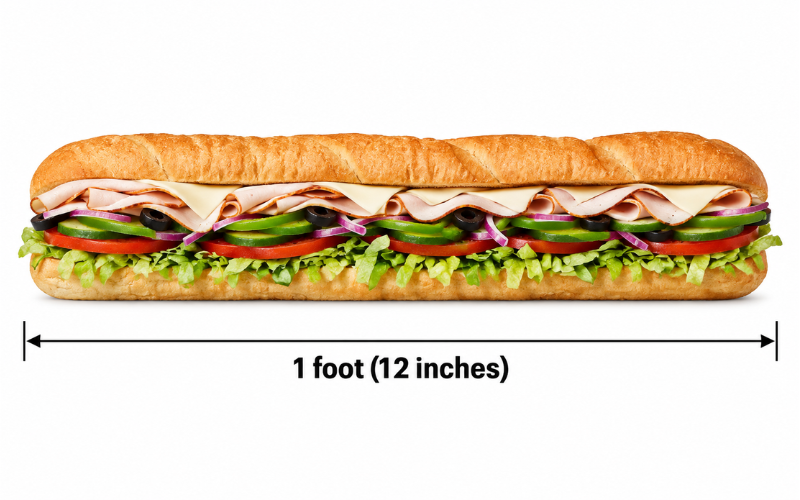
The short answer is yes, though it has sparked plenty of public debate and media scrutiny over the years. When the sandwich chain prepares your sub on freshly baked bread, corporate standards dictate that the loaf must measure a full twelve inches in length. Bakers shape the dough using specialized baking forms that ensure uniformity across thousands of franchise locations daily.
Beyond the fast-food counter, this item serves as a brilliant cultural benchmark for twelve inches. Whenever someone asks you how long a foot looks, referencing a standard sub roll instantly brings a clear picture to mind. It proves that culinary arts and precise geometry can go hand in hand. 🍔
Why This Measurement Matters in the Kitchen
Standardization in food preparation keeps customer expectations aligned. When you order a footlong, you expect your meal to match the promised dimensions. Bakers measure dough weight and length meticulously before sending trays into commercial ovens. This rigorous attention to detail ensures that whether you buy your lunch in New York, London, or Tokyo, your sandwich hits that exact twelve-inch target. 🥖
2. The Traditional Wooden Rolling Pin 🥖
Baking enthusiasts and home cooks know the value of a reliable rolling pin. While bakeries feature massive industrial rollers, standard residential kitchen counters feature traditional wooden rolling pins that frequently measure exactly twelve inches in barrel length.
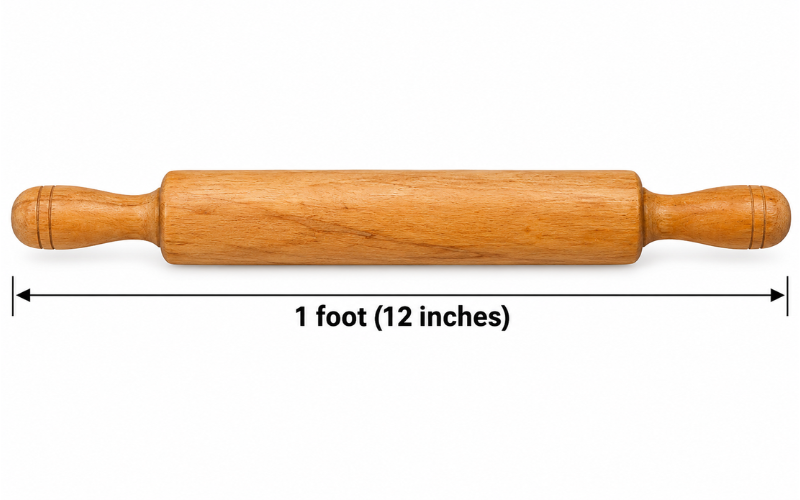
When crafting pie crusts, cookie dough, or homemade pasta, bakers rely on a balanced tool. A twelve-inch rolling barrel provides enough surface area to flatten large dough circles quickly while remaining compact enough to store easily in a standard kitchen drawer.
Manufacturers turn hardwood like maple, beech, or birch on lathes to achieve precise dimensions. The cylindrical body maintains an exact one-foot span, excluding the side handles. This makes it a fantastic, unintentional measuring device hiding in your kitchen cabinet. 🥧
Ergonomics and Control While Baking
Using a rolling pin requires downward pressure and smooth rolling motions. A twelve-inch length offers optimal leverage for your hands. If the barrel were too long, your wrists would strain to apply even pressure across the dough. If it were too short, you would leave ridges and uneven spots in your pastry. Hitting that sweet spot of twelve inches guarantees professional baking results right at home. 🥣
3. The Standard 12-Inch Metal Ruler 📏
It sounds almost too obvious to mention, but a standard metal or wooden school ruler represents the gold standard for measuring twelve inches. Millions of students carry these tools in their backpacks, and carpenters keep them tucked into tool belts worldwide.
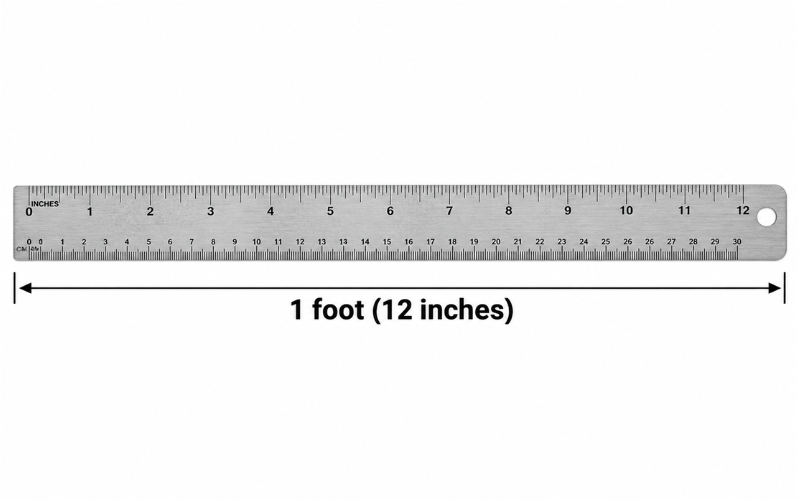
The beauty of a standard ruler lies in its unwavering accuracy. Etched markings divide that exact twelve-inch span into fractions, centimeters, and millimeters. Whether you are drafting architectural sketches, measuring fabric for a sewing project, or checking margins on a school report, the ruler provides an absolute baseline for linear measurement.
Metal rulers, in particular, resist warping and wear. Stainless steel construction ensures that the twelve-inch length remains constant across decades of use, unaffected by humidity, temperature changes, or accidental drops. It is the ultimate physical manifestation of a foot. ✏️
History and Evolution of the Ruler
Humanity has relied on linear measuring devices for thousands of years. Ancient civilizations used marked sticks and bone fragments to standardize trade and construction. The modern twelve-inch ruler evolved alongside industrial manufacturing, where mass production required interchangeable parts and universal standards. Today, it remains an indispensable item in every office, classroom, and workshop. 📐
4. A Standard Brick 🧱
Construction sites and masonry projects rely heavily on standardized building materials to ensure structural integrity. If you examine a standard modular clay brick used in modern architecture, you will find fascinating dimensions designed for modular coordination.
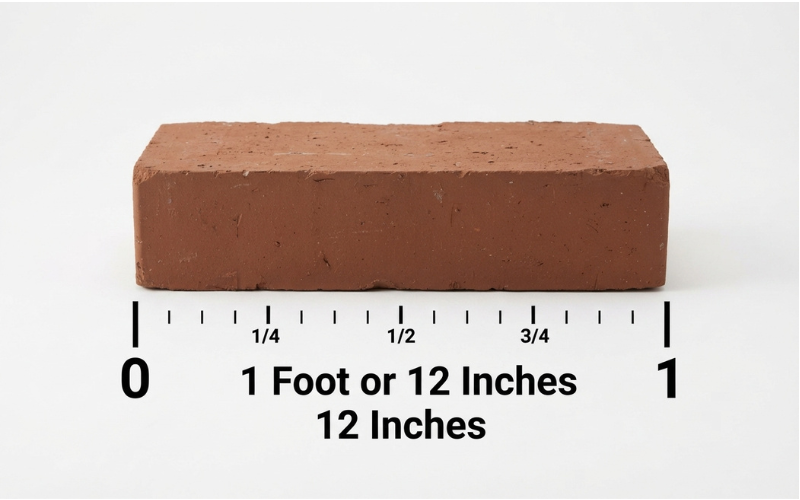
While standard bricks vary slightly by region, many common residential and commercial bricks measure twelve inches in length when laid out in specific stretcher configurations, or individual specialty format bricks measure exactly one foot long. For example, Roman-style architectural bricks and certain decorative pavers hit that precise twelve-inch threshold.
Masons rely on these exact dimensions to calculate mortar joints, wall spans, and structural load distributions. Without standardized sizing, building skyscrapers and residential homes would turn into an unpredictable guessing game. 🏗️
The Mathematics of Masonry
Building walls requires precise geometric alignment. Masons use the brick’s length as a modular unit. When a brick measures one foot long, calculating linear footage for estimating material costs becomes remarkably straightforward. Contractors multiply the number of bricks per course by twelve inches to determine total wall length instantly. It is practical mathematics in action. 🛠️
5. A Standard Loaf Pan 🍞
If you love baking homemade bread, pound cakes, or meatloaf, your kitchen cabinet likely houses a standard metal or glass loaf pan. These essential bakeware items typically measure twelve inches in length along their top outer rim, though interior dimensions often hover around nine to ten inches with sloping sides.
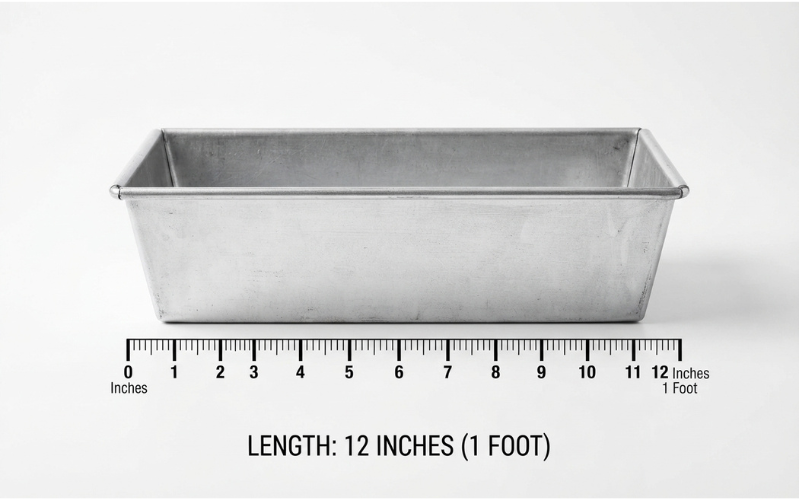
However, professional-grade commercial loaf pans and Pullman pans frequently measure an exact twelve inches from end to end, designed specifically to fit standard commercial oven racks and proofing boxes.
Manufacturers stamp these pans out of heavy-gauge aluminized steel to conduct heat evenly. The precise length ensures that dough rises uniformly, creating that classic rectangular loaf shape we all recognize on grocery store shelves. 🍰
Heat Distribution and Baking Physics
Baking a successful loaf of bread requires uniform heat transfer from the pan walls to the dough center. A twelve-inch metal pan absorbs oven heat rapidly and radiates it consistently. If the pan dimensions fluctuated wildly, baking times would become unpredictable, resulting in burnt crusts or undercooked centers. Standardization is the secret ingredient to consistent culinary success. 🥐
6. A Standard Bowling Pin 🎳
Step inside any bowling alley, and you stare down a polished lane at ten triangularly arranged pins. Have you ever wondered how tall a regulation bowling pin stands?
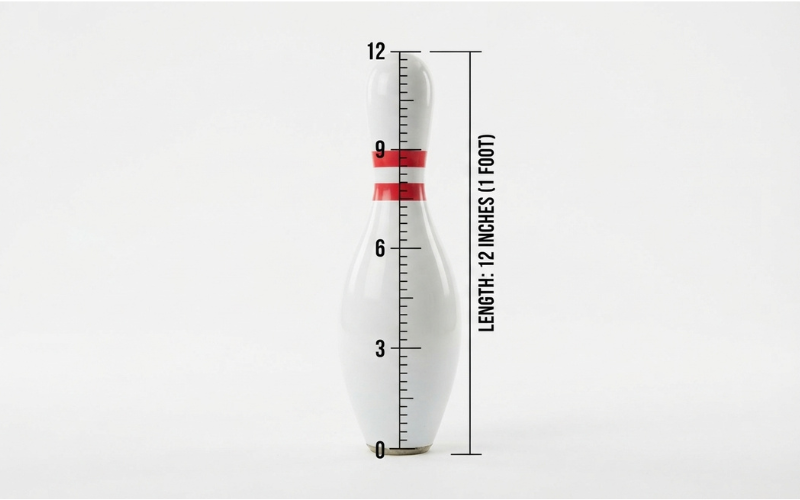
According to official regulations set by the United States Bowling Congress (USBC) and World Bowling, a standard outdoor or indoor ten-pin bowling pin stands exactly 15 inches tall. However, candlepin and duckpin variations differ significantly, and specific novelty or toy bowling sets, as well as specific historical pin types, measure precisely twelve inches in height.
Even in regulation bowling, individual sections of the pin such as the base diameter or specific tapering points incorporate precise sub-measurements that match imperial fractions. While a full regulation pin stands taller than a foot, desk toys, miniature arcade bowling sets, and certain junior training pins are built to an exact one-foot height for portability and balance. 🎳
Physics of the Strike
The shape of a bowling pin is a masterpiece of physics. By distributing weight unevenly—heavier at the belly and tapered at the neck—engineers control how the pin reacts when struck by a heavy sphere rolling at high speeds. Whether tall or miniaturized for tabletop games, the geometry dictates the game’s mechanics. 🎯
7. A Standard Shoebox Width (or Small Shoebox Length) 📦
Walk into any shoe store or open your bedroom closet, and you encounter dozens of cardboard shoeboxes stacked neatly on shelves. While shoebox dimensions vary wildly depending on whether they hold infant booties, men’s work boots, or stiletto heels, specific footwear packaging standards align closely with our magic number.
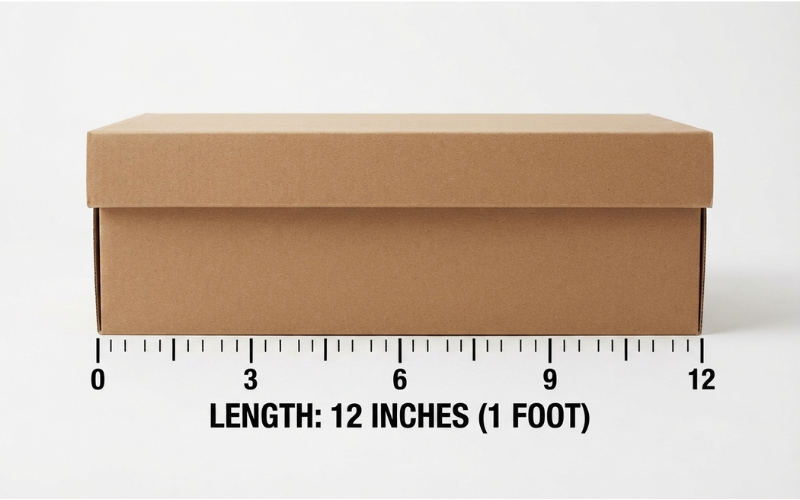
Many standard children’s shoeboxes or compact packaging boxes measure exactly twelve inches in length. Alternatively, standard adult shoeboxes often feature a width that measures precisely one foot across, making them exceptionally easy to line up side-by-side on closet shelving units.
Cardboard box manufacturers design these containers for optimal storage efficiency, pallet stacking, and shipping logistics. The one-foot dimension fits neatly into standard shelving depths found in modern home architecture. 👟
Organization and Spatial Efficiency
Maximizing storage space in a cramped apartment or walk-in closet requires smart organization. Because many storage containers and shoebox dimensions incorporate twelve-inch measurements, you can stack them uniformly. This geometric harmony prevents wasted gaps and keeps your wardrobe looking pristine and tidy. 🧦
8. A Standard Wine Bottle Height (Body Excluding Neck) 🍷
Wine connoisseurs appreciate the nuances of vintage, terroir, and bottle shape. Standard Bordeaux and Burgundy wine bottles hold 750 milliliters of liquid and stand roughly 11.5 to 12 inches tall overall.
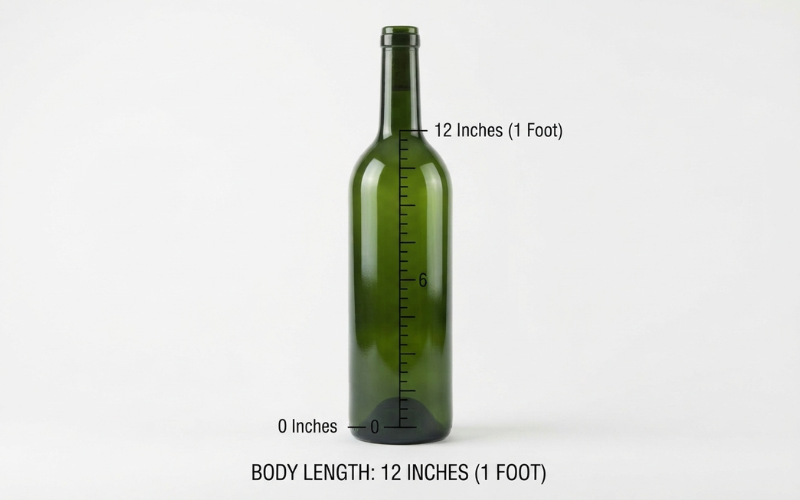
However, if you measure the cylindrical body of a standard wine bottle from the flat base up to the point where the shoulder begins to taper into the neck, you will find it measures an exact twelve inches in many classic European glassworks.
Glassblowers and automated bottling plants adhere to strict ISO standards to ensure bottles fit seamlessly into commercial wine racks, shipping crates, and restaurant cellars. 🍷
The Art of Cellaring Wine
Storing wine correctly requires horizontal placement to keep corks moist. Wine racks feature individual cubbies engineered to hold bottles securely. Standardizing bottle dimensions around twelve-inch lengths ensures that wine cellars can maximize capacity without risking bottle slippage or breakage. It is a brilliant intersection of industrial design and viniculture. 🍇
9. A Standard School Desk Ruler Tray or Groove ✏️
If you sit down at a traditional wooden school desk or a vintage classroom table, you will often notice a small, recessed groove carved into the desktop just above the writing surface.
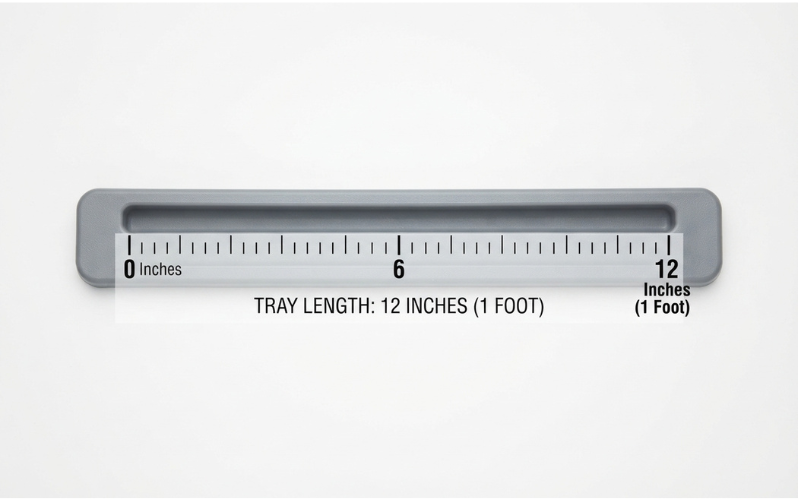
This built-in pencil tray is engineered specifically to hold writing instruments, erasers, and a standard ruler. In many classic school furniture designs, this groove measures an exact twelve inches in length.
School furniture manufacturers designed these desks to keep students organized, preventing pencils and rulers from rolling off the edge and clattering onto the classroom floor. It represents a subtle, everyday design choice rooted entirely in the one-foot measurement. 📚
Ergonomics in Educational Spaces
Designing furniture for growing children requires careful ergonomic planning. By embedding a twelve-inch groove directly into the workspace, manufacturers give students instant access to a measuring tool without cluttering their active writing area. It is a clever, functional detail that has stood the test of time in academic environments. 🏫
10. A Standard Musical Recorder Instrument 🎶
Did you play the soprano recorder in elementary school music class? This lightweight, plastic or wooden woodwind instrument is often a child’s first introduction to wind instruments.
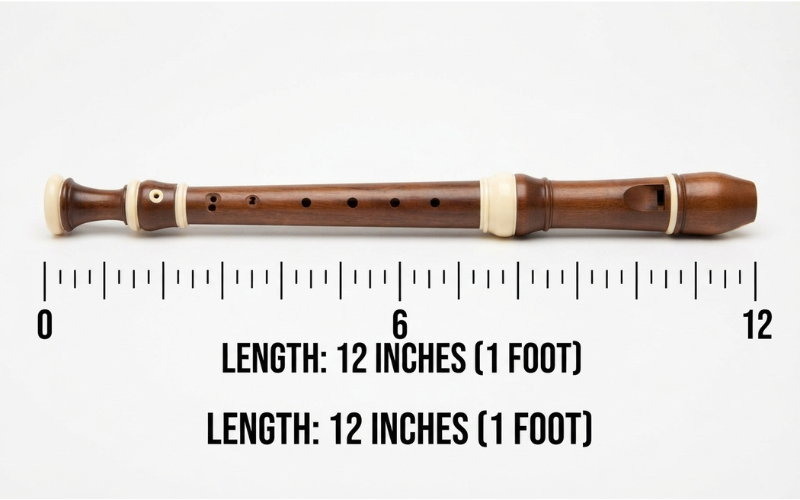
A standard soprano recorder measures precisely twelve inches from the mouthpiece tip to the footjoint bell. This specific length allows the instrument to produce its signature pitch in the key of C, making it easy for students to learn fundamental musical scales.
Instrument makers calibrate the internal bore and tone hole placements around this one-foot physical length. It proves that music and precise geometry go hand in hand. 🎵
Acoustics and Instrument Design
The physics of sound depend heavily on column length. In a wind instrument, the length of the vibrating air column determines the fundamental pitch. By fixing the soprano recorder at exactly twelve inches, acoustical engineers ensure that students produce clear, resonant notes that harmonize perfectly in classroom ensembles. 🎼
Biowiki Table 📊
| Feature | Description |
| Primary Subject | Everyday Objects Measuring Exactly 1 Foot (12 Inches) Tall or Long |
| Standard Measurement | 12 Inches (1 Foot / 30.48 Centimeters) |
| Common Contexts | Culinary, Construction, Education, Office Organization, Music |
| Key Benchmark Item | Standard Metal School Ruler / Subway Footlong Sandwich |
| Primary Industries | Manufacturing, Baking, Architecture, Stationery, Packaging |
| Measurement System | Imperial System / US Customary Units |
Related Article:
- 10 Common Everyday Objects That Are Exactly 100 Inches Tall
- 10 Common Everyday Objects That Are Exactly 90 Inches Tall
- 10 Common Everyday Objects That Are Exactly 80 Inches Tall
- 10 Common Everyday Objects That Are Exactly 70 Inches Long
Frequently Asked Questions (FAQs) 🤔
What is the exact metric equivalent of 1 foot?
One foot equals exactly 30.48 centimeters or 0.3048 meters in the metric system.
Are all Subway footlong sandwiches guaranteed to be 12 inches?
Yes, corporate quality standards require franchise locations to bake bread that measures a full twelve inches in length, though slight natural variations in baking can occur.
Why is a foot divided into 12 inches?
The division of a foot into twelve inches dates back to ancient civilizations, likely influenced by duodecimal counting systems (base 12) and human anatomy, where twelve thumb-widths or finger joints aligned conveniently.
Can I use everyday objects as a substitute for a ruler?
Absolutely! Keeping items like a standard metal ruler, a rolling pin, or knowing the length of a standard brick helps you make quick, rough estimates when a tape measure is unavailable.
Conclusion 🎯
Understanding measurements does not have to feel like a tedious geometry lesson. By recognizing the everyday objects around us that measure exactly one foot tall or long, we connect practical design with the physical world. From the kitchen rolling pin and school desk groove to the classic footlong sub and metal ruler, twelve inches is a standard measurement woven into the fabric of daily life. The next time you need to estimate a foot of space, just look around your home you are likely surrounded by them! ✨
📏 Keep Exploring Measurements
Discover more practical guides about everyday lengths, measurements, conversions, and useful size references.