
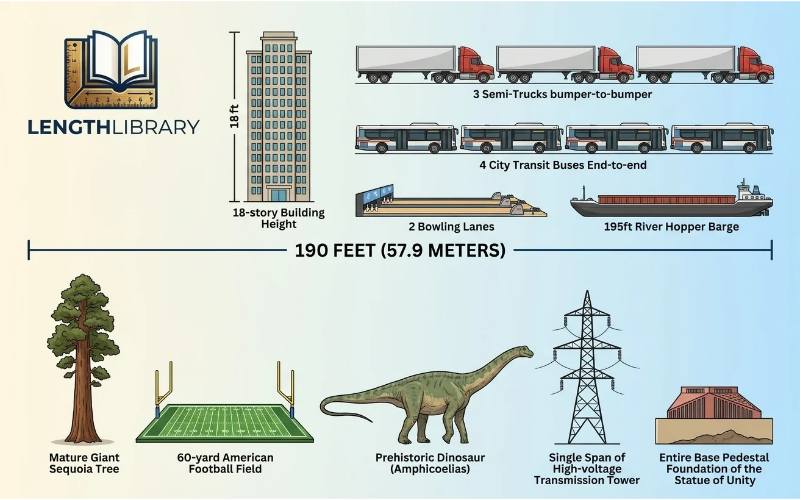
Measuring spatial distances in technical units like feet or meters often feels abstract until you compare them to familiar, real-world physical structures. A length of 190 feet (57.91 meters or 2,280 inches) represents a substantial physical scale. It matches the height of iconic historical monuments, the combined length of standard transportation vehicles, and specific athletic field dimensions.
When you visualize 190 feet, you are looking at roughly two-thirds the length of a standard American football field (excluding end zones) or roughly the height of an 18-story residential building.
Understanding this specific distance helps in fields ranging from urban planning and heavy logistics to architecture and everyday visual estimation. Below is an in-depth breakdown of 10 real-world objects, structures, and combined benchmarks that measure exactly or approximately 190 feet long.
⚡ Quick Answer Section
If you need a fast mental snapshot, here is a list of items and structures that hit or closely align with the 190-foot mark:
- 🗽 The Pedestal Base of the Statue of Unity: Stands at roughly 190 feet (58 meters) high.
- 🦕 Amphicoelias Fragillimus: Estimated prehistoric sauropod dinosaur reaching 190 feet in total length.
- 🛩️ Boeing 737-900 (Wingspan Scale): Almost matching the combined length of two 737 passenger jets parked nose-to-tail.
- 🚛 Three Standard Semi-Trailer Trucks: Placed bumper-to-bumper, three 53-foot trailers with tractors equal ~190 feet.
- 🎳 Two Professional Bowling Lanes (End-to-End): Placing two complete lane assemblies together totals roughly 173 to 190 feet including approach areas.
- 🚌 Four Standard Municipal Transit Buses: Four 45-foot city buses parked end-to-end total 180–190 feet with space gaps.
- 🌲 Mature Giant Sequoia / Blue Gum Eucalyptus: Typical mature height of mid-sized giant redwoods or tall blue gum trees.
- ⚓ Commercial River Barges (Small Scale): Standard narrow hopper barges measure between 175 and 195 feet in length.
- 🏢 An 18-Story Building: Standard commercial stories average 10–10.5 feet per floor, totaling ~190 feet tall.
- 🚩 Standard Olympic Swimming Pool (Near Match): An Olympic pool measures 164 feet, so 190 feet is an Olympic pool plus two additional parking spaces.
📊 BioWiki & Specifications Summary Table
| Object / Landmark | Primary Category | Exact / Approximate Measurement | Context / Note |
| Statue of Unity Base | Architectural Monument | 190 feet (58 m) | Height of the foundation base supporting the world’s tallest statue. |
| Amphicoelias Fragillimus | Prehistoric Paleontology | 190 feet (57.9 m) | Maximum estimated length of the giant sauropod dinosaur. |
| 3 Semi-Trucks Combined | Commercial Transport | ~190 feet total | 3 tractor-trailer combinations (~63 ft each) aligned end-to-end. |
| 4 City Transit Buses | Public Infrastructure | 180–190 feet | 4 standard 45-foot highway motorcoaches or municipal buses. |
| 18-Story Building Height | Commercial Architecture | ~190 feet tall | Standard floor-to-floor height including structural slabs. |
| Giant Sequoia (Mid-Growth) | Natural Botany | 180–190 feet | Average height of a young-adult Sequoiadendron giganteum. |
| 2 Bowling Lanes (Full Length) | Sports Facilities | ~173–190 feet | Includes approach area, lane surface, pindeck, and service aisle. |
| Standard Hopper Barge | Maritime Transport | 195 feet (Standard) | Standard inland river freight barge (Inland deck size). |
| High-Voltage Transmission Tower | Energy Infrastructure | 180–190 feet | Typical height for regional double-circuit 500kV suspension pylons. |
| 60-Yard Football Field Segment | Athletic Fields | 180–190 feet | Roughly 60% of an American football field gridiron. |
🔍 In-Depth Breakdown: 10 Objects and Landmarks Measuring 190 Feet
1. 🗿 The Base Pedestal of the Statue of Unity
The Statue of Unity in Gujarat, India, holds the record as the world’s tallest statue, reaching an overall height of 790 feet (240 meters). However, its massive structural foundation base alone stands at 190 feet (58 meters) tall.
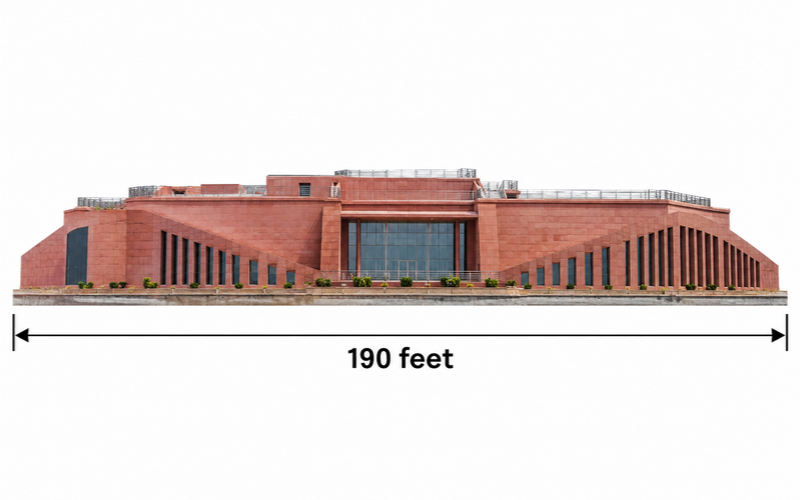
Engineers designed this 190-foot pedestal to support thousands of tons of concrete, steel framing, and bronze cladding. The pedestal houses a multi-level exhibit hall, a visitor museum, and high-speed elevator shafts that lift tourists up to the observation deck located near the chest level of the monument. Visualizing this foundation gives you a clear sense of what 190 feet looks like in solid reinforced concrete architecture.
2. 🦕 Amphicoelias Fragillimus (Prehistoric Sauropod)
In 1877, paleontologist Edward Drinker Cope documented fossil fragments of a colossal sauropod dinosaur named Amphicoelias fragillimus. Based on the reconstruction of its partial neural arch, scientists estimated the total length of the creature at 190 feet (57.9 meters) from its snout to the tip of its whip-like tail.
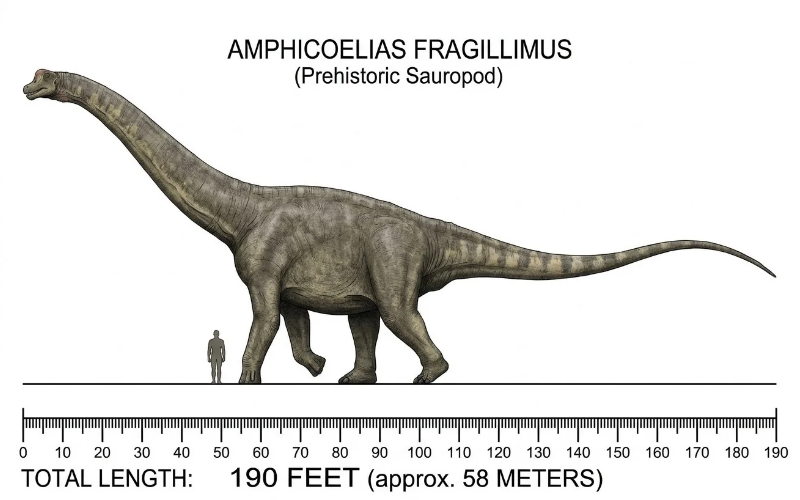
While the original bone specimen disappeared under mysterious circumstances in the late 19th century, paleontological models still reference the 190-foot measurement as a benchmark for maximum theoretical terrestrial animal size. A creature of this length would extend across the width of a six-lane highway, making it one of the largest land animals ever described in historical science.
3. 🚛 Three Commercial Semi-Trailer Trucks Linked End-to-End
Commercial semi-trucks are everyday sights on interstate highways. A standard long-haul tractor paired with a 53-foot dry van trailer measures roughly 65 to 70 feet in total overall length from the front bumper to the rear door.
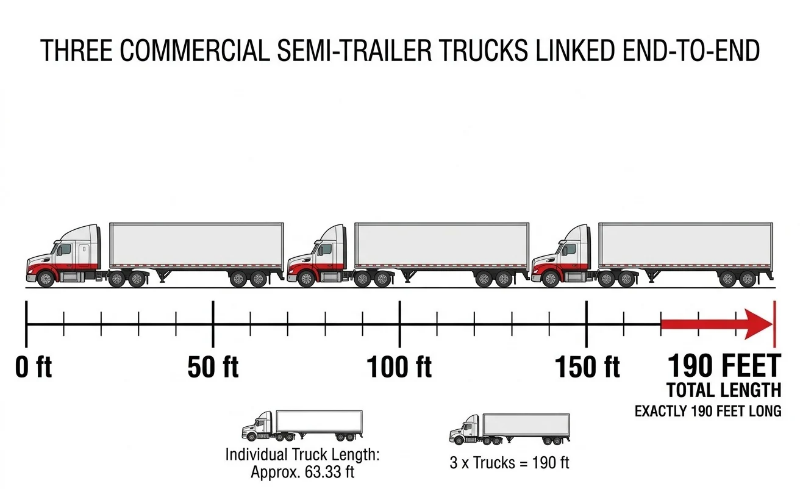
When you park three semi-trucks end-to-end with minimal spacing between bumpers, the total length hits 190 feet. Highway planners and traffic safety engineers use this multi-vehicle comparison to determine safe pass zones, turning radiuses, and weigh-station ramp clearance distances.
4. 🚌 Four Standard Municipal Transit Buses
If you commute in a city, you know how long a standard municipal transit bus looks at a bus stop. A typical city bus such as a Gillig Low Floor or New Flyer Xcelsior measures approximately 40 to 45 feet in length.
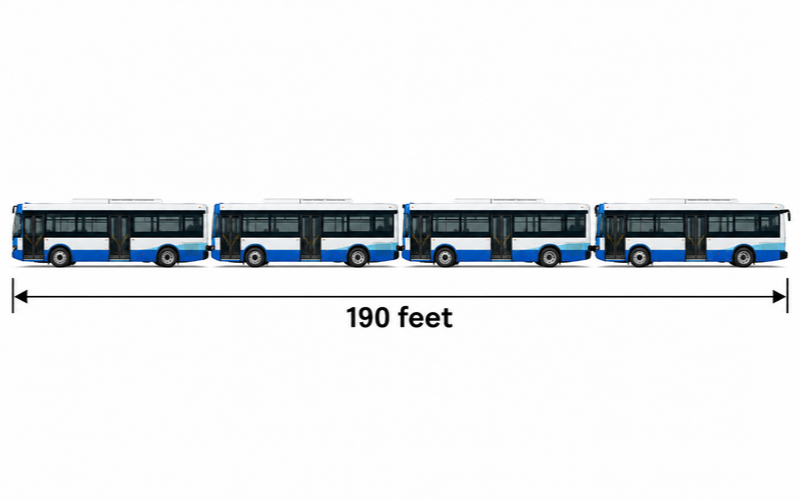
Parking four 45-foot transit buses end-to-end creates a continuous line of vehicles spanning 180 to 190 feet. Next time you see a line of buses waiting at a transit terminal, count four of them in sequence to visualize a true 190-foot physical footprint.
5. 🏢 An 18-Story Commercial Building Height
Architectural standards for modern commercial office buildings dictate a floor-to-floor height of roughly 10.5 to 11 feet, accounting for ceiling clearance, structural concrete slabs, ductwork, and electrical conduits.
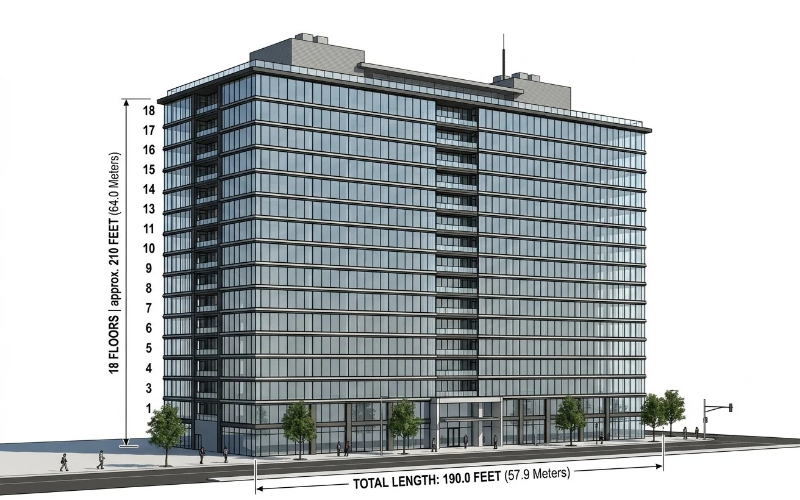
An 18-story office tower measures right around 190 feet tall from the ground-level sidewalk to the main roof line. Looking up from the base of an 18-story city building gives you an accurate sense of vertical perspective for a 190-foot distance.
6. 🌲 Mature Giant Sequoia (Mid-Stage Growth)
The Giant Sequoia (Sequoiadendron giganteum) is famous for being the world’s most massive tree species. While ancient specimens like General Sherman reach over 275 feet, mid-aged giant sequoias in California’s Sierra Nevada mountain range average between 180 and 190 feet tall.
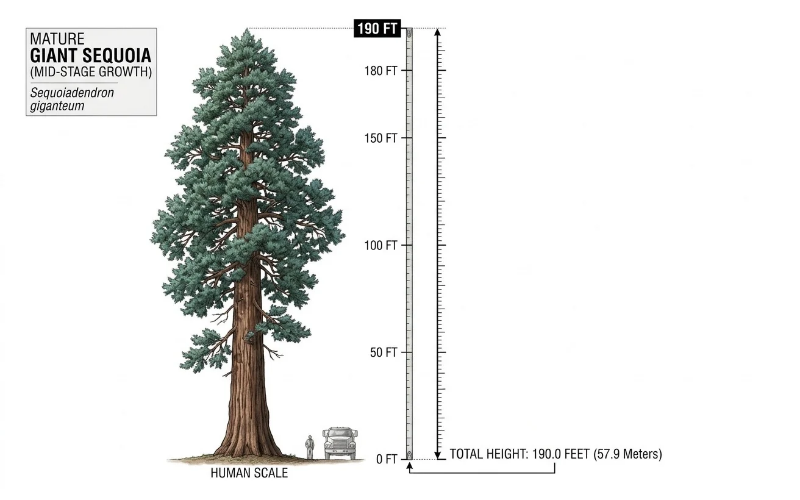
At 190 feet, a sequoia tree trunk can reach a diameter of 15 to 20 feet at its base. Standing at the base of a 190-foot redwood provides a vivid example of how 190 feet scales in natural forestry.
7. 🎳 Two Professional Bowling Lanes (End-to-End Assembly)
A standard regulation bowling lane measures 60 feet from the foul line to the center of the headpin. However, the entire mechanical assembly including the player approach area (15 feet), the lane bed itself (62.8 feet), the pinsetter space, and the rear service corridor totals approximately 86.5 feet per lane set.
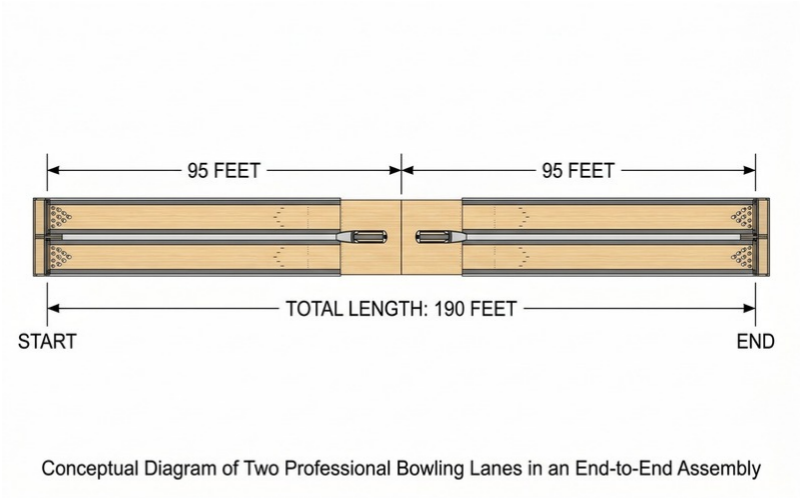
When bowling center contractors construct back-to-back lane frames or deep dual-lane installations, the structural foundation footprint spans between 173 and 190 feet.
8. 🚢 Standard River Hopper Barge
On major inland waterways like the Mississippi, Ohio, and Missouri Rivers, freight movements rely heavily on unpowered hopper barges. The industry standard “Jumbo” hopper barge used for grain, coal, and aggregate transport measures 195 feet long by 35 feet wide.
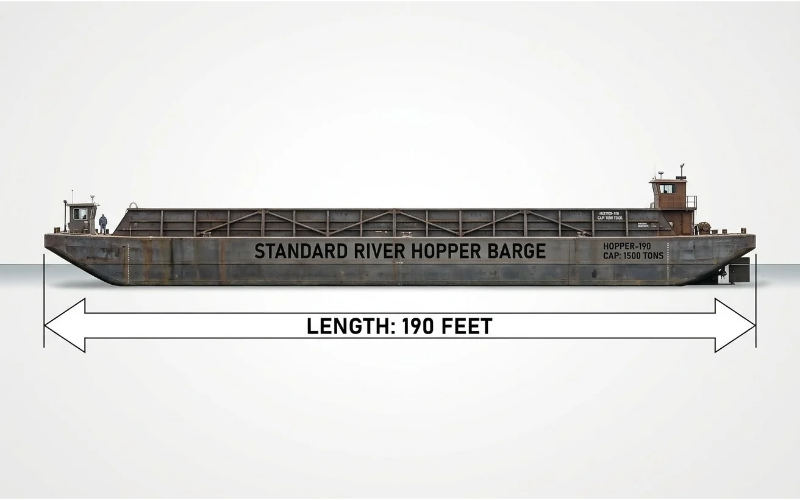
A single barge laid out along a river bank is almost identical to the 190-foot mark. When tugboats push multi-barge tow configurations (such as a 3×5 grid), tow captains calculate steering clearance based on these precise 190-to-195-foot unit lengths.
9. ⚡ High-Voltage Electrical Transmission Tower
The massive lattice-steel utility pylons carrying high-voltage electrical lines across cross-country rights-of-way come in standardized engineered heights.
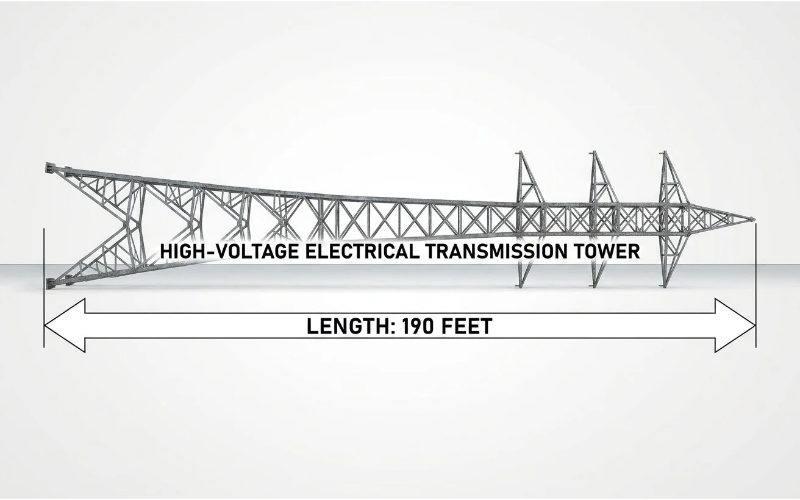
A standard double-circuit 500kV suspension tower typically stands 180 to 190 feet high above its concrete footings. These towers require this precise elevation to maintain safe ground clearance for high-voltage cables hanging under heavy electrical loads and high thermal expansion.
10. 🏈 A 60-Yard Field Segment on an American Football Field
An American football field measures 300 feet (100 yards) between the goal lines, with two 30-foot end zones bringing the total field footprint to 360 feet.
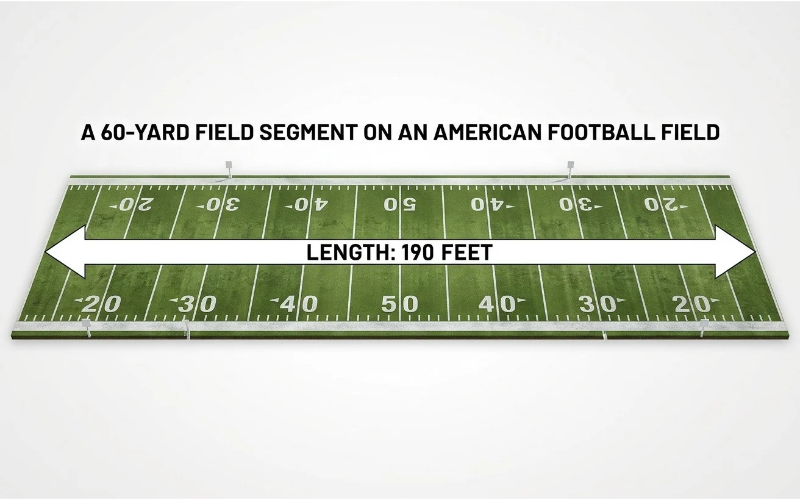
If you measure from one goal line to the opposing team’s 40-yard line, you get 60 yards, which converts directly to 180 feet. Adding the width of a single goal-line paint stripe brings the span to nearly 190 feet, making a 60-yard drive one of the easiest ways for sports fans to visualize this distance.
📐 Converting 190 Feet to Other Units
To help clear up measurements in engineering or international project work, here is how 190 feet translates across common units of measure:
- Inches: 2,280inches
- Yards: 63.33yards
- Meters: 57.912meters
- Centimeters: 5,791.2centimeters
- Kilometers: 0.0579kilometers
- Miles: 0.0359miles
❓ Frequently Asked Questions (FAQs)
What is the easiest way to visualize 190 feet in real life?
The simplest real-world visual is three semi-trucks parked end-to-end or looking up at an 18-story building. If you are familiar with sports, think of 60 yards on a football field, which covers the distance from one goal line past the 50-yard mid-field line to the opposing 40-yard mark.
How many meters are 190 feet?
There are 57.912 meters in 190 feet. The exact conversion uses the factor 1foot=0.3048meters.
How long does it take to walk 190 feet?
At an average adult walking speed of 3 miles per hour (4.4 feet per second), walking 190 feet takes roughly 43 seconds.
Is 190 feet longer than an Olympic swimming pool?
Yes. A standard regulation Olympic-size swimming pool measures 50 meters (164 feet) long. A distance of 190 feet is about 26 feet longer than an Olympic pool.
What sports fields measure close to 190 feet?
While few professional sports courts measure exactly 190 feet, a 60-yard segment of an American football field equals 180 feet. Additionally, professional hockey rinks in the NHL measure 200 feet long, making them just 10 feet longer than 190 feet.
More Articles to Explore:
- 10 Common Everyday Objects That Are Exactly 180 Feet Long
- 10 Common Everyday Objects That Are Exactly 170 Feet Long
- 10 Common Everyday Objects That Are Exactly 160 Feet Long
- 10 Common Everyday Objects That Are Exactly 150 Feet Long
🏁 Conclusion
Visualizing specific spatial measurements like 190 feet becomes easy when you connect abstract numbers to real-world objects. Whether comparing architectural benchmarks like the 190-foot pedestal base of the Statue of Unity, prehistoric giants like Amphicoelias fragillimus, or simple everyday sights like three full-sized semi-trucks parked bumper-to-bumper, this 57.9-meter distance represents a significant physical scale. Keeping these real-world benchmarks in mind gives you an immediate mental ruler for estimating large distances across urban environments, transportation networks, and natural landscapes.
📏 Keep Exploring Measurements
Discover more practical guides about everyday lengths, measurements, conversions, and useful size references.